
SafeGamer.ai: Protecting Families with AI-Powered Roblox Safety
Data & AI Digital & App Innovation
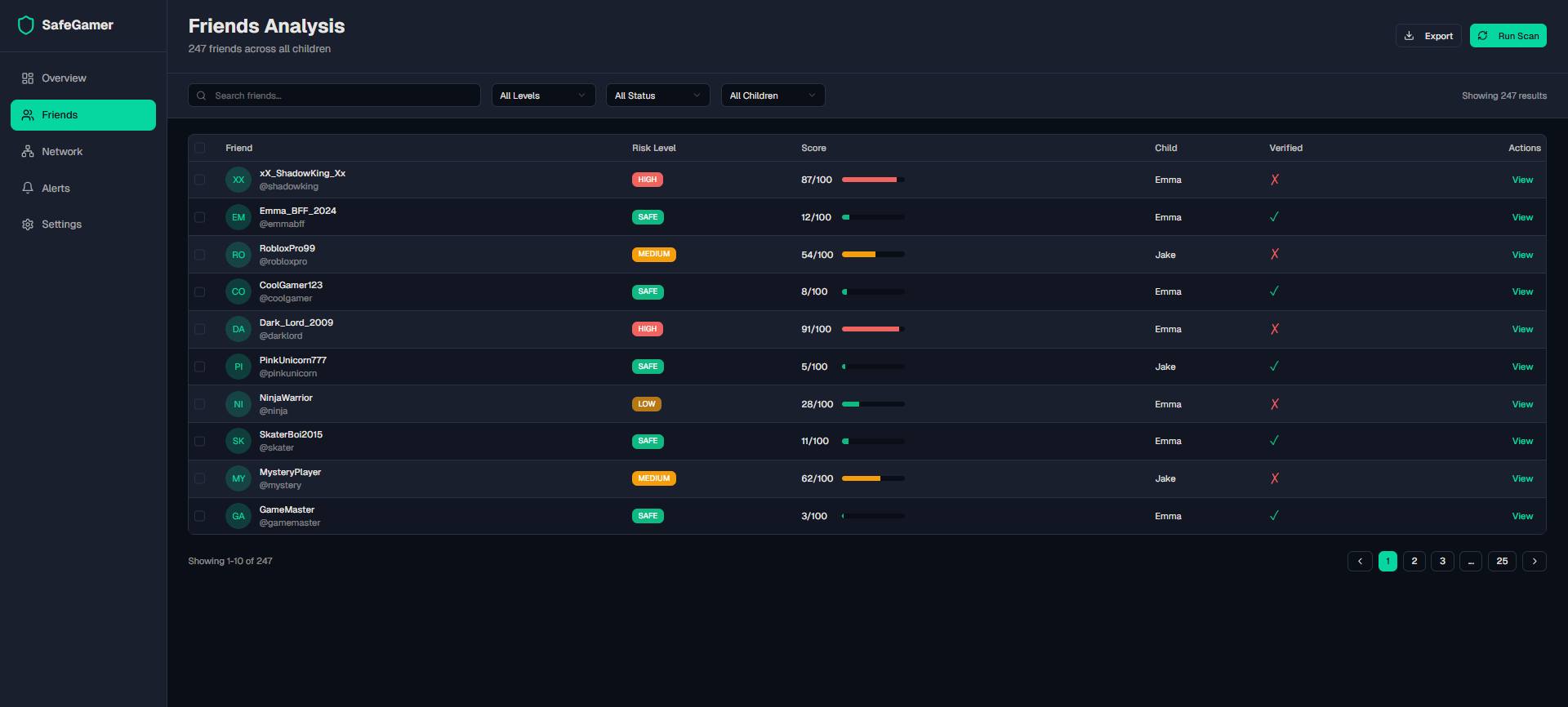
Online gaming has become one of the primary ways children socialize and explore digital worlds. Platforms like Roblox connect millions of players every day, allowing kids to play, create, and interact with friends from around the world.
But for many parents, this raises an important question:
Who exactly are their children interacting with online?
At Maxim Cloud Solutions, we recognized a growing gap between the way kids experience online gaming and the level of visibility parents have into that world. Parents want to keep their children safe, but they also want to respect their independence and avoid constant surveillance.
This challenge led us to build SafeGamer, an AI-powered safety platform designed to help families better understand and protect their child’s Roblox experience.
The Problem: Visibility Without Intrusion
Roblox allows children to build large networks of friends and connections. While this social environment is exciting for kids, it can also introduce potential risks that are difficult for parents to identify.
Parents often struggle with questions like:
- Who are these friends?
- Are any interactions potentially unsafe?
- Are there warning signs they might be missing?
- How can they monitor activity without constantly looking over their child’s shoulder?
Traditional parental control tools tend to focus on restriction and blocking. However, we believed a better approach would be to provide parents with intelligent insights rather than rigid controls.
SafeGamer was designed to fill that gap.
The Idea Behind SafeGamer
SafeGamer was built around a simple principle:
Give parents clarity, not control.
Instead of spying on conversations or limiting gameplay, SafeGamer analyzes signals across a child’s Roblox network to identify patterns that may indicate potential risks.
The goal is to alert parents early, allowing them to start healthy conversations with their children rather than reacting after something goes wrong.
What We Built
SafeGamer is a full product, not a proof of concept. Maxim Cloud Solutions designed and shipped it end to end: the pattern-recognition engine that scores a child’s network for risk signals, the parent-facing dashboard that turns those signals into plain-language insight, and the cloud infrastructure that runs it all securely and at scale.
- A risk-analysis engine that surfaces concerning patterns without reading private conversations
- A parent dashboard built around clarity, showing what matters and why
- Secure, privacy-first data handling for a product built around children
- A live platform families can sign up for and use today
The Outcome
SafeGamer moved a real product into the hands of real families. It reframes online safety from blocking and surveillance to insight and conversation, giving parents a way to stay involved without hovering.
For Maxim, SafeGamer is proof of how we work: we do not just advise on cloud and AI, we build and operate the products that run on them. From a first idea to a live, hosted platform, we owned the architecture, the AI, and the delivery.